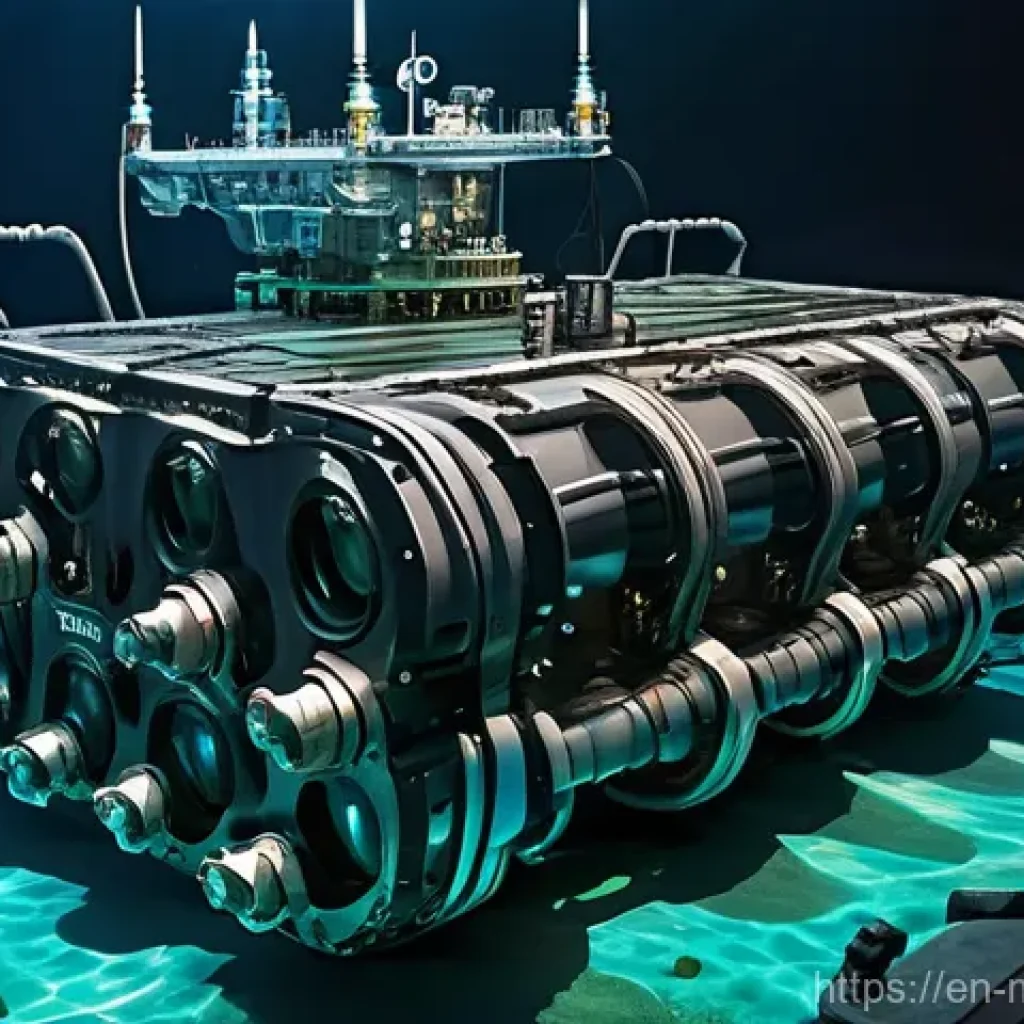
Hey everyone! You know, sometimes I just stare at the ocean and think about all the mysteries hidden beneath those vast blue waters. It’s truly mind-boggling to imagine the incredible resources lying thousands of feet down, especially when it comes to deep-sea gas.
Lately, there’s been so much buzz around this topic, and it’s not just about the incredible technological leaps we’re making, but also the crucial balance between tapping into these energy reserves and protecting our delicate marine ecosystems.
I’ve been diving deep into the latest developments, from groundbreaking new projects promising to fuel our future to the ongoing debates about environmental impacts and economic viability.
It’s a complex landscape, full of both incredible opportunity and significant challenges that we really need to understand. Let’s unravel the fascinating world of deep-sea gas development together, and I’ll make sure you’re up to speed on what’s truly happening.
The Allure of the Deep: Why We’re Looking Down
Hey there, fellow explorers! You know, for ages, humanity has gazed up at the stars, but lately, my eyes have been drawn downward, deep into the ocean’s mysterious embrace. It’s absolutely wild to think about what’s lurking thousands of feet beneath those shimmering waves, especially when it comes to energy. We’re talking about vast reserves of natural gas, just sitting there, waiting to be tapped. The global hunger for energy isn’t slowing down, and with traditional onshore and shallow-water resources becoming scarcer, it’s almost inevitable that we’d start peering into the abyss. I mean, who wouldn’t be fascinated by the sheer scale of the challenge and the incredible potential reward? I’ve personally been following some of these developments for years, and every new breakthrough feels like we’re writing a new chapter in human ingenuity. It’s not just about meeting current demand; it’s about securing our energy future and exploring every viable avenue, even if it means venturing into some of the most hostile environments on Earth. The technological leaps required are mind-boggling, truly pushing the boundaries of what we thought was possible, and honestly, that’s what makes this topic so utterly captivating to me.
The World’s Growing Energy Appetite
Let’s be real: our world runs on energy. From the devices we’re all using right now to the cars we drive and the homes we heat, it all requires a constant, reliable supply. As populations grow and economies expand, particularly in developing nations, that demand only intensifies. I often think about how much my own daily life depends on readily available energy, and it makes me appreciate the urgency behind exploring all options. It’s a global balancing act, trying to provide enough power without completely burning through our planet’s resources. Deep-sea gas, while certainly not a silver bullet, offers a significant potential piece of that complex energy puzzle. It’s about diversification, ensuring that we don’t put all our eggs in one basket, and having a range of options available as we transition to a more sustainable future.
Unlocking Hidden Riches
The sheer volume of deep-sea gas is staggering. Experts estimate there are trillions of cubic feet of gas trapped under the seabed, far beyond what we’ve already extracted from more accessible locations. For me, that’s almost hard to visualize – it’s a quantity that could power entire countries for decades! The discovery of these massive reserves has sparked a modern-day gold rush, albeit one that requires submarines, advanced robotics, and platforms that defy imagination. It’s not just about the gas itself, but the economic ripple effect that comes with its discovery and extraction. New jobs, technological advancements, and increased energy security are all part of the equation, making it an incredibly attractive prospect for energy companies and nations alike. I’ve seen firsthand how these kinds of projects can revitalize entire regions, even with all the challenges involved.
Unlocking the Abyss: The Tech Behind the Extraction
Honestly, when I first started learning about deep-sea gas extraction, my jaw was practically on the floor. We’re talking about operating miles below the ocean’s surface, in pitch-black, freezing, and incredibly high-pressure environments. The engineering feats involved are nothing short of miraculous. Imagine drilling through thousands of feet of water, then through miles of rock, all while battling incredible currents and potential subsea landslides. It’s like building a skyscraper upside down, underwater, in space – just mind-boggling! Companies are investing billions into developing robotics, specialized drilling ships, and subsea processing facilities that can withstand these brutal conditions. I’ve always been a bit of a tech enthusiast, so seeing how innovation is driving this sector forward is incredibly exciting. It makes you realize just how far human ingenuity can push the boundaries when there’s a significant enough challenge and reward.
Cutting-Edge Drilling Platforms
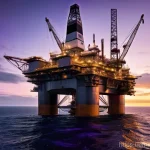
The iconic image of an oil rig usually involves something floating on the surface, but deep-sea operations take this to a whole new level. These aren’t your grandpa’s oil rigs; we’re talking about massive, semi-submersible platforms or drillships that are dynamically positioned, meaning they use computer-controlled thrusters to stay in an exact spot over the well, regardless of waves or currents. I’ve seen videos of these giants in action, and it’s truly impressive how stable they remain even in rough seas. They’re equipped with advanced sensors and remotely operated vehicles (ROVs) that act as the eyes and hands of engineers on the surface, performing tasks that no human could endure at those depths. The complexity is just mind-blowing, and it highlights the extreme dedication to safety and precision required for these operations.
Robots and Subsea Infrastructure
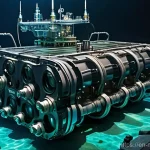
This is where it gets really futuristic! Since humans can’t work directly at extreme deep-sea pressures, robots are the unsung heroes of deep-sea gas extraction. ROVs, or Remotely Operated Vehicles, are crucial for inspecting equipment, performing maintenance, and even making repairs. These aren’t just toys; they’re sophisticated machines capable of precise maneuvers and heavy lifting. Beyond the ROVs, a whole network of subsea infrastructure is deployed on the ocean floor – pipelines, wellheads, processing equipment – all designed to operate autonomously or be remotely controlled for years on end without human intervention. It’s a testament to incredible materials science and engineering. Thinking about these silent cities of machinery humming away miles below the surface, sending energy back up to us, gives me chills in the best possible way. It’s truly a world hidden from view, yet vital to our modern lives.
Navigating the Environmental Currents: A Delicate Balance
Okay, let’s get real for a moment. While the allure of deep-sea gas is powerful, it absolutely comes with a crucial caveat: the environment. Anyone who follows my blog knows I’m a huge advocate for protecting our planet, and deep-sea environments are some of the most fragile and least understood ecosystems on Earth. It’s a delicate balance, trying to meet our energy needs while ensuring we don’t cause irreparable harm. I’ve spent countless hours reading reports and talking to experts, and the concerns are very valid. We’re exploring areas that are home to unique species, some of which we haven’t even discovered yet, and the thought of disrupting those pristine habitats is genuinely unsettling. It’s not a simple black-and-white issue, but one that requires immense responsibility and foresight from everyone involved.
Protecting Fragile Ecosystems
The deep sea is a world unto itself, teeming with life adapted to extreme conditions – think hydrothermal vents with their unique chemosynthetic organisms, or vast coral systems that have been growing for millennia. These environments are incredibly slow to recover from disturbance, if they recover at all. My biggest worry, and one I know many share, is the potential for accidental spills or the routine discharge of drilling fluids. Even noise pollution from seismic surveys can disrupt marine mammals. It’s absolutely imperative that deep-sea operations adhere to the highest environmental standards, and honestly, that they continuously innovate to minimize their footprint. We’re talking about a legacy here, and we need to ensure it’s one of responsible stewardship, not regret. It truly keeps me up at night sometimes, thinking about these precious habitats.
Regulatory Challenges and Oversight
Another major piece of this puzzle is effective regulation. Who monitors these operations? How do we ensure compliance with environmental safeguards across international waters? It’s incredibly complex, as different nations have different rules and enforcement capabilities. I believe there needs to be a robust, globally coordinated effort to establish clear guidelines and independent oversight bodies that have the power to enforce them. Without strong regulatory frameworks, the risks increase exponentially. We need transparency, accountability, and the ability to adapt as we learn more about these deep-sea environments. It’s not just about what companies *can* do, but what they *should* do, and having external checks and balances is absolutely vital for maintaining trust and preventing potential disasters.
Economic Tides: The Costs and Benefits
Beyond the technical marvels and environmental considerations, there’s a massive economic story unfolding with deep-sea gas development. It’s a high-stakes game, demanding enormous upfront investment but promising significant returns. When I look at the numbers, I’m always struck by the sheer scale of the capital involved. We’re talking billions upon billions of dollars for exploration, development, and infrastructure. This isn’t a quick flip; these are projects that span decades. But when a major deep-sea field comes online, the economic benefits can be transformative for nations and energy markets. It’s a calculated gamble, but one that many major energy players and governments are willing to take, especially with the fluctuating global energy landscape. I’ve seen how these mega-projects can create thousands of jobs, drive local economies, and bolster national energy independence, which is a huge plus in today’s geopolitical climate.
The Price Tag of Deep Exploration
Let’s be blunt: deep-sea gas is incredibly expensive to find and extract. The specialized equipment, the advanced technology, the highly skilled personnel – it all adds up. A single deep-water well can cost hundreds of millions of dollars, and developing an entire field can easily run into the tens of billions. I once heard an engineer describe it as the “moon shot” of the energy industry, and honestly, that feels about right! These costs mean that only the largest, most well-capitalized energy companies can realistically undertake such ventures. For smaller players, it’s often about partnerships and joint ventures to share the financial burden and the inherent risks. It also means that the price of natural gas needs to remain relatively high to make these projects economically viable, which can sometimes be a sticking point for consumers.
Economic Benefits and Geopolitical Impact
On the flip side, the economic upsides are substantial. Successfully bringing a deep-sea gas field into production can generate immense revenue through exports and domestic consumption, boosting national treasuries and contributing to GDP. For countries with limited conventional resources, deep-sea gas can offer a path to energy independence, reducing reliance on volatile international markets. This shift in energy supply can also have significant geopolitical implications, altering power dynamics and strengthening national security. I’ve witnessed how new energy discoveries can change a nation’s standing on the global stage, and deep-sea gas is no exception. It’s not just about fuel; it’s about power, influence, and the long-term prosperity of nations.
| Aspect | Opportunities | Challenges |
|---|---|---|
| Resource Potential | Vast untapped reserves, long-term energy supply. | High exploration risk, complex geology. |
| Technological Advancement | Pushes boundaries of engineering, fosters innovation. | Requires immense R&D investment, specialized expertise. |
| Economic Impact | Job creation, national revenue, energy independence. | Extremely high upfront costs, long ROI period, market volatility. |
| Environmental Considerations | Potential for lower carbon footprint than coal (when burned). | Risk of spills, habitat disruption, biodiversity loss, noise pollution. |
| Regulatory Framework | Opportunity for global cooperation and standardized practices. | Complex international waters, varying national regulations, enforcement difficulties. |
The Future Horizon: What’s Next for Deep-Sea Energy
So, where do we go from here? The future of deep-sea gas development is a fascinating mix of continued innovation, evolving environmental concerns, and shifting global energy policies. It’s clear that this isn’t a trend that’s going away anytime soon, but it will certainly evolve. I imagine a future where the technologies become even more efficient and less invasive, driven by an ever-increasing demand for both energy and environmental protection. It’s a sector that’s constantly pushing the envelope, and I find that incredibly exciting to watch. I’m personally always on the lookout for new reports and pilot projects that signal the next big leap, because in this field, change is the only constant. It’s a journey, not a destination, and we’re still very much in the early chapters of deep-sea energy exploration.
Innovations on the Horizon
The pace of innovation in deep-sea technology is truly breathtaking. I’m seeing more and more research into things like even smarter robotics that can perform more complex tasks autonomously, reducing the need for constant human oversight and potential risks. There’s also a big push for better seismic imaging to more accurately pinpoint reserves, minimizing the number of exploratory wells. And let’s not forget about advanced materials science, creating pipelines and equipment that can withstand even greater pressures and corrosive environments. My hope is that these innovations will not only make extraction more efficient but also significantly safer for the environment. It’s about leveraging our collective brainpower to solve some of the planet’s toughest challenges, and that’s a mission I can definitely get behind.
Balancing Energy Needs with Sustainability Goals
This is perhaps the biggest challenge of all. How do we continue to meet our energy demands, which are undoubtedly growing, while simultaneously transitioning to a more sustainable, low-carbon future? Deep-sea gas, being a fossil fuel, presents a conundrum. It’s cleaner-burning than coal, often seen as a “bridge fuel” to renewables, but it’s not a zero-emission solution. I believe the conversation needs to focus on how deep-sea gas can play a responsible role in this transition, perhaps by supporting industrial processes that are hard to electrify, or by providing grid stability as renewable energy sources become more prevalent. It requires a nuanced approach, not a blanket rejection or acceptance, but a thoughtful integration into a broader energy strategy that prioritizes long-term planetary health. It’s a conversation we all need to be part of, honestly.
My Take: Balancing Innovation with Responsibility
After diving deep (pun intended!) into the world of deep-sea gas, I can tell you my feelings are a complex mix of awe, excitement, and a healthy dose of caution. On one hand, the human ingenuity required to tap into these immense resources is truly inspiring. The engineering, the science, the sheer determination – it’s a testament to what we can achieve when we set our minds to it. I’ve always been drawn to stories of human endeavor pushing against the limits, and deep-sea exploration definitely fits that bill. It’s hard not to feel a surge of optimism when you consider the potential for energy security and economic growth these projects offer, especially for nations striving to uplift their populations and secure their futures. I often find myself pondering the grand scale of these operations and the incredible impact they have.
Personal Reflections on Deep-Sea Energy
When I think about these projects, I often compare them to other great human adventures. Like space exploration, but in reverse. The commitment, the risks, and the potential rewards are all there. What truly resonates with me is the idea of pushing boundaries, not just technologically, but also in our understanding of the planet. I’ve personally felt the sting of rising energy costs, so the idea of unlocking new, stable sources is genuinely appealing. However, my passion for marine life and environmental protection also tugs at my conscience. I want to believe that we can pursue these resources with the utmost care and responsibility, that the lessons learned from past mistakes will be applied, and that innovation will always go hand-in-hand with preservation. It’s a hope I cling to, as I believe humanity is capable of incredible things when it truly commits.
The Ethical Imperative
Ultimately, for me, the core of this entire discussion boils down to an ethical imperative. We have a responsibility to future generations – to provide them with the energy they need, but also to leave them a healthy planet. This means every deep-sea gas project must be scrutinized, not just for its economic viability, but for its social and environmental impact. It requires transparency, independent oversight, and continuous improvement in safety and environmental protection. As individuals, we might not be drilling rigs, but our voices matter. By staying informed, asking tough questions, and supporting responsible policies, we can all contribute to ensuring that this incredible technological frontier is navigated with wisdom and integrity. It’s a collective effort, and one that I truly believe we can rise to meet.
Wrapping Things Up
So, as we chart the course through the depths of deep-sea energy, it’s clear we’re standing at a pivotal moment. This journey isn’t just about what’s beneath the waves; it’s a profound reflection of our collective drive for progress and our evolving understanding of responsibility. I truly believe that by fostering open dialogue, prioritizing cutting-edge safety, and embracing both innovation and conservation, we can unlock these vital resources in a way that truly benefits everyone. It’s an exciting, challenging, and absolutely essential conversation to keep having, and I’m thrilled to be part of it with all of you.
Handy Insights You’ll Want to Keep
1. Deep-sea gas refers to natural gas reserves found thousands of feet below the ocean’s surface, often beneath thick layers of rock and sediment.
2. The extreme environment of the deep sea (high pressure, low temperature, darkness) necessitates highly advanced robotics and specialized drilling technology for extraction.
3. Environmental concerns surrounding deep-sea drilling include the risk of spills, disruption of unique marine ecosystems, and noise pollution from operations.
4. Economically, deep-sea gas projects require immense upfront investment but offer significant potential returns in terms of energy security and national revenue.
5. While a fossil fuel, natural gas is often considered a “bridge fuel” to a cleaner energy future due to its lower carbon emissions compared to coal when burned.
Key Takeaways
In essence, deep-sea gas represents a fascinating frontier in our global energy quest. It promises vast, untapped resources that could significantly bolster energy independence and economic growth for many nations. However, this potential comes hand-in-hand with substantial technological hurdles, astronomical costs, and, most critically, pressing environmental responsibilities. Navigating this complex landscape requires continuous innovation, stringent regulatory oversight, and a steadfast commitment to protecting our planet’s most fragile ecosystems. It’s a delicate balance, but one we must strive to master for a sustainable future.
Frequently Asked Questions (FAQ) 📖
Q: So, what exactly is deep-sea gas, and why are we suddenly hearing so much about it everywhere?
A: You know, it’s funny how quickly some topics surge into the spotlight! Deep-sea gas, at its core, is just natural gas that’s trapped in reservoirs thousands of feet beneath the ocean floor.
We’re talking seriously deep, often under incredibly high pressures and low temperatures. For the longest time, it was pretty much out of reach, but now?
Well, it’s a game-changer. What’s driving the buzz, from what I’ve seen, is a combination of things. On one hand, our need for energy just keeps growing, and traditional sources are getting harder to find or are politically sensitive.
On the other, the technology has just exploded! We’ve made such incredible strides in engineering and robotics that tapping into these previously inaccessible reserves is actually becoming viable.
It’s not just a far-off dream anymore; it’s a potential reality that could really shake up global energy markets. I remember thinking how wild it was when I first heard about the scale of these potential reserves – it’s mind-boggling to imagine what’s down there.
Q: Drilling way down under the ocean sounds pretty risky for our marine environment. How safe is deep-sea gas development, really, and what are the actual environmental concerns?
A: This is honestly my biggest concern when I look at these projects, and it’s a question I hear a lot. Anytime you’re dealing with deep-sea operations, there are inherent risks, right?
The big worry, of course, is a potential oil or gas spill, which could devastate fragile marine ecosystems. Think about all the unique species that call those deep waters home – a major incident could have long-lasting effects.
Beyond catastrophic spills, there’s also the impact of seismic surveys used to find the gas, which can be disruptive to marine mammals, and the physical footprint of drilling platforms and pipelines.
These can alter habitats and introduce noise and light pollution. I’ve been following the discussions closely, and it’s clear that while the industry is investing heavily in advanced safety measures and stricter regulations, environmental groups are still raising valid points about the ‘what if’ scenarios.
It’s a really tough balancing act between our energy needs and protecting our incredible oceans, and I don’t think anyone has a perfect answer yet.
Q: Given all the massive technical challenges and the environmental risks we just talked about, is it even worth the colossal investment to extract deep-sea gas? What’s the economic payoff here?
A: That’s the million-dollar question, isn’t it? Or more accurately, the multi-billion-dollar question! When I first looked into the sheer cost of these projects – the specialized ships, the advanced robotics, the years of development – it honestly made my eyes water.
It’s an incredibly expensive undertaking, and the return on investment isn’t guaranteed, especially with fluctuating global energy prices. However, from an economic and strategic standpoint, many governments and energy companies see it as a worthwhile gamble.
For one, these reserves represent significant untapped energy independence for nations, which is a huge geopolitical advantage. Secondly, successful projects can lead to massive revenue streams, creating thousands of high-paying jobs in engineering, manufacturing, and operations.
It’s also seen by some as a crucial ‘bridge fuel’ as the world transitions to cleaner energy, providing a more reliable energy source than some conventional alternatives.
I think the ‘worth it’ factor really comes down to a nation’s energy security priorities and their long-term economic strategy, weighing the huge upfront costs against the potential for stable, domestic energy supply for decades to come.
It’s a complex calculation for sure.