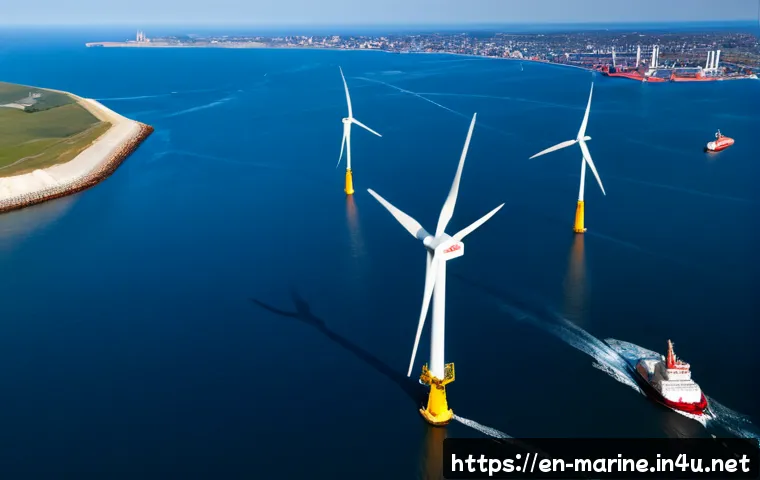
Permitting, revenue support, and grid access are the three offshore wind policy areas most likely to shape project viability. Before committing capital, developers and buyers should test how each rule affects schedule exposure, financing confidence, and delivery risk.
Offshore wind policy is not only a public-policy issue; it directly influences procurement choices, environmental consulting scope, grid-connection studies, and contract structure.
A project can have a strong resource area yet remain difficult to finance if consent, transmission, or offtake assumptions are unclear. Comparing the policy framework early helps teams decide whether to proceed internally, seek specialist support, or revise the development plan.
The practical goal is not to predict an approval outcome, but to identify assumptions that need evidence before money is committed.
At a Glance
- Permitting: Seabed rights, construction consent, navigation, and environmental review may follow separate processes.
- Revenue: Auctions, contracts for difference, power purchase agreements, and merchant exposure create different levels of revenue certainty.
- Grid access: The party responsible for offshore and onshore connection can materially change cost, timing, and risk allocation.
| Policy element | Commercial consequence | Evidence to request | Common specialist support |
|---|---|---|---|
| Seabed rights and leasing | Determines site control, development exclusivity, and early-stage obligations | Lease terms, area boundaries, milestones, and transfer conditions | Energy legal adviser, development consultant |
| Environmental permitting | Can affect survey scope, mitigation measures, consent timing, and design | Environmental review requirements, stakeholder records, survey plans | Environmental consulting, maritime studies |
| Grid-connection model | Changes capital responsibility, commissioning dependencies, and delay exposure | Connection process, grid studies, responsibility matrix, delivery assumptions | Grid-connection consultant, owner’s engineer |
| Revenue framework | Shapes bankability, price risk, and financing assumptions | Auction rules, support-contract terms, PPA structure, merchant assumptions | Commercial adviser, energy legal counsel |
| Supply-chain and local-content rules | May influence supplier selection, port strategy, vessel planning, and procurement timing | Applicable requirements, procurement criteria, delivery constraints | Supply-chain adviser, turbine procurement team |
The Policy Areas That Most Affect Offshore Wind Project Economics
The most important policy question is not simply whether offshore wind is supported. It is which party carries the cost, timing, and performance risk at each development stage. A workable financial case needs clarity on site rights, consent obligations, grid delivery, and the route to revenue.
Seabed Rights, Leasing, and Development Exclusivity
Leasing or seabed-rights processes may be separate from construction and generation permits. Holding rights to investigate or develop an area does not remove the need to secure later approvals. Teams should review the project boundary, milestones, obligations, and any conditions that could affect transfer, design changes, or development sequencing.
A common planning error is treating site control as proof of project readiness. It is better viewed as an early gate. Confirm what the right allows, what it requires, and what further consents remain. Legal review is particularly useful where lease obligations interact with auction participation, local-content rules, or financing deadlines.
Permitting, Environmental Review, and Stakeholder Obligations
Environmental review can cover marine mammals, birds, fisheries, underwater noise, habitats, shipping lanes, and visual effects where relevant. Community, fisheries, and maritime stakeholders may also influence design choices, mitigation measures, and consent timelines. These are commercial issues because additional studies or design changes can affect engineering scope and contractor planning.
Start with a clear permitting map: which authority handles seabed rights, construction, navigation, environmental effects, and grid connection? Then match each approval to the evidence required. Early environmental surveys and maritime studies can reduce uncertainty, but their timing and scope should reflect the applicable rules and site conditions.
Grid Access and Revenue Certainty as Bankability Factors
Grid connection can sit with the developer, a transmission operator, or a shared offshore network model. Each approach changes the project’s capital needs and dependencies. A developer-led model may require more direct coordination and technical work, while a regulated or shared approach can leave the project exposed to external delivery timing.
Revenue support matters just as much. Contracts for difference, competitive auctions, PPAs, and merchant-market exposure allocate price risk differently. Before using a revenue assumption in an investment case, confirm the governing rules, eligibility conditions, delivery obligations, and interaction with curtailment or grid availability where applicable.
Compare Offshore Wind Policy Models Before Building a Financial Case
A policy framework should be compared as a package. A favorable revenue mechanism may not offset uncertain connection timing or demanding supply-chain requirements. The best model depends on the project’s risk capacity, development maturity, and ability to absorb changing assumptions.
Competitive Auctions, Contracts for Difference, and Power Purchase Agreements
Competitive auctions can determine access to a support framework but may require bidders to make assumptions about costs, schedule, and supply availability. A contract for difference can provide a defined revenue-support structure, subject to its terms. A power purchase agreement can align an offtaker and generator around contracted power, price, and delivery provisions. Merchant exposure leaves more revenue linked to market conditions.
There is no universally better option. Compare the allocation of price risk, volume risk, delivery obligations, change-in-law treatment, and termination rights. Corporate buyers should avoid assuming that a PPA alone resolves permitting or grid uncertainty.
Developer-Led Versus Regulated Grid-Connection Models
With developer-led connection, the project team may need deeper involvement in cable design, connection studies, interface management, and procurement. Under a transmission-led or shared model, the developer may have less direct construction responsibility but still needs to understand dependency risk.
Ask for a responsibility matrix that identifies who performs studies, builds assets, manages interfaces, and carries delay exposure. A grid offer should be assessed alongside the project schedule, not as a standalone document.
Local-Content Rules, Tax Treatment, and Supply-Chain Implications
Policy changes can affect local-content requirements, tax treatment, auction design, and permitting procedures. These rules may influence port capacity planning, installation-vessel availability, cable sourcing, and turbine supply contracts. They should be reflected in procurement criteria rather than treated as a late compliance task.
Do not assume a supplier plan is workable solely because equipment is technically suitable. Confirm whether the plan aligns with applicable rules, delivery windows, and the available specialist installation and port infrastructure.
How Policy Requirements Translate Into Cost, Schedule, and Delivery Risk
Policy becomes a budget issue when it creates surveys, studies, mitigation, interfaces, or procurement conditions. The most useful early model links every material requirement to an owner, a workstream, and a decision date.
Budget Lines Often Underestimated During Early Development
Early budgets can overlook the combined scope of environmental consulting, navigation assessment, fisheries engagement, grid-connection studies, legal review, insurance review, and owner’s-engineer support. Port capacity, specialist vessels, cable availability, and turbine supply contracts can also materially affect construction schedules and budgets.
Use ranges and stated assumptions rather than unsupported precision. If an item depends on a future auction rule, connection offer, permit condition, or supplier availability, mark it as requiring verification.
When Environmental Surveys and Maritime Studies Should Begin
Environmental and maritime work should begin early enough to inform project design and consent strategy. The right point depends on the jurisdiction, the proposed site, and the required review process. Starting too late can leave teams reacting to issues after engineering or commercial assumptions have hardened.
A practical trigger is the moment a site moves from broad screening to a defined development concept. At that stage, compare environmental consulting proposals by survey scope, assumptions, stakeholder approach, deliverables, and exclusions—not only by headline fee.
How Permitting Delays Can Affect Financing and Contractor Availability
Delays can change the timing of financing, revenue eligibility, vessel windows, cable procurement, and turbine supply arrangements. They may also force a project to revisit assumptions that were valid when the original bid or PPA was prepared.
This does not mean delay is inevitable. It means the financial case should identify dependencies clearly. Scenario planning should distinguish between items the project controls and items controlled by authorities, transmission parties, or suppliers.
Practical Due Diligence for Developers, Utilities, and Corporate Buyers
Due diligence should test whether the project story is supported by documents, not whether it sounds plausible. Each party needs a view of what has been secured, what is pending, and what could change the economics.

Documents and Assumptions to Verify Before Committing Capital
Review seabed-rights documentation, permitting pathways, environmental review scope, stakeholder engagement records, grid studies, connection responsibilities, revenue-support conditions, and major supply-chain assumptions. Utilities and buyers should also review how the expected delivery profile is reflected in the commercial contract.
Separate confirmed facts from planning assumptions. A grid route, auction outcome, tax treatment, or consent result may require further confirmation from the responsible authority or adviser.
Questions to Ask Legal, Environmental, Grid, and Engineering Advisers
Ask legal advisers which approvals are separate and which conditions could affect the development schedule. Ask environmental advisers what surveys, mitigation measures, and stakeholder issues could influence design. Ask grid specialists what assumptions underpin connection timing and interface responsibility. Ask engineering advisers how port, vessel, cable, and turbine constraints affect the construction sequence.
For external support, request a scope that states assumptions, deliverables, exclusions, dependencies, and how changes will be handled. This makes advisory-cost comparisons more meaningful.
Common Mistakes in Policy and Procurement Planning
Common mistakes include treating lease rights as a complete permit package, using unsupported revenue assumptions, leaving grid responsibility unclear, and selecting suppliers before assessing policy-driven constraints. Another mistake is treating stakeholder engagement as separate from consent strategy.
A stronger approach is to keep a live risk register connecting each policy requirement to cost, schedule, revenue, and procurement decisions.
Different Priorities for Public Authorities, Project Sponsors, and Power Offtakers
Offshore wind policy affects each participant differently. A well-structured process recognizes that a public authority, a project sponsor, and a corporate buyer are solving different problems.
Public-Sector Focus: Competition, Marine Planning, and Community Impacts
Public authorities may focus on competition, marine planning, stakeholder impacts, navigation, fisheries, and the practical delivery of consent processes. Clear process design can help applicants understand the evidence needed without predetermining an approval outcome.
Developer Focus: Bankability, Consent Risk, and Construction Readiness
Project sponsors need to connect policy requirements with a financeable delivery plan. Their priority is a credible path from site rights through permitting, grid access, procurement, construction, and revenue. Bankability depends on the combined risk picture, not one favorable policy feature.
Buyer Focus: Contract Structure, Delivery Profile, and Price-Risk Allocation
Corporate power buyers and utility procurement teams should understand how policy and grid conditions affect the contracted delivery profile. They should assess price-risk allocation, conditions precedent, change mechanisms, and what happens if a project’s schedule or regulatory position changes.
Selection Criteria and Comparison Summary for Offshore Wind Support Services
When to Use Internal Capability Versus External Specialists
Internal teams may coordinate the overall investment case, while external specialists can be useful for jurisdiction-specific permitting, environmental consulting, grid studies, marine engineering, insurance review, and owner’s-engineer assignments. External support is most valuable where a decision depends on technical evidence or regulatory interpretation that the team cannot independently validate.
Comparing Scope, Experience, Assumptions, and Total Advisory Cost
Compare proposals on scope coverage, relevant offshore wind experience, stated assumptions, interface management, deliverables, exclusions, and total advisory cost. A lower fee may not be comparable if key surveys, grid analysis, stakeholder work, or procurement support are excluded.
A Final Go/No-Go Checklist Before the Next Procurement Step
Before the next procurement or capital decision, confirm that the team can answer these questions:
- Are seabed rights, permits, and grid responsibilities mapped separately?
- Is the revenue case based on a support mechanism, PPA, merchant exposure, or a combination that has been clearly described?
- Have environmental, maritime, fisheries, and community considerations been incorporated into design and schedule assumptions?
- Do port, vessel, cable, and turbine supply assumptions match the intended construction plan?
- Are policy changes, external dependencies, and unresolved approvals visible in the risk register?
Compare grid studies, permitting scope, and owner’s-engineer proposals before selecting a provider. Official guidance and detailed service conditions should be checked on the relevant authority or provider page.
Conclusion
Offshore wind policy should be assessed as a delivery framework, not a background condition. Seabed rights, environmental permitting, grid access, and revenue support can each alter the financial case. The strongest decisions make dependencies visible early and assign clear ownership for resolving them. Where assumptions remain uncertain, targeted legal, environmental, grid, or engineering advice can be more useful than relying on a generic project model.
Useful Information to Keep in Mind
1. A lease or seabed right may be separate from construction and generation approvals.
2. Grid responsibility may sit with the developer, a transmission operator, or a shared network arrangement.
3. Environmental review can influence both design and consent timing.
4. Supply-chain readiness includes ports, vessels, cables, and turbine contracts—not only turbine selection.
5. Policy rules and project assumptions should be reviewed again before major procurement commitments.
Important Notes
This guide is a general decision framework, not legal, regulatory, engineering, environmental, tax, insurance, or investment advice. Applicable country, state, local, and marine-area rules must be confirmed for the proposed project. Auction terms, incentives, lease fees, connection charges, permitting outcomes, site conditions, financing availability, and supplier capacity can change and require project-specific verification.
Frequently Asked Questions
Q1. Which offshore wind policies have the biggest effect on project cost?
A1. Policies affecting seabed rights, environmental permitting, grid connection, revenue support, local-content requirements, and tax treatment can all affect project cost. Their impact depends on who carries responsibility, what evidence is required, and whether the rule changes schedule or procurement assumptions.
Q2. Is a contract for difference or a corporate power purchase agreement better for an offshore wind project?
A2. Neither is automatically better. A contract for difference, a corporate PPA, and merchant exposure create different revenue and risk profiles. The appropriate structure depends on applicable rules, the project’s financing needs, delivery obligations, price-risk allocation, and the parties’ willingness to accept uncertainty.
Q3. When should an offshore wind developer hire permitting, grid, or environmental consultants?
A3. Specialist support is often worth considering when a site moves from initial screening toward a defined development concept, or when consent pathways, survey requirements, grid responsibility, or procurement interfaces could change the investment case. The required timing and scope should be confirmed for the relevant jurisdiction and project stage.